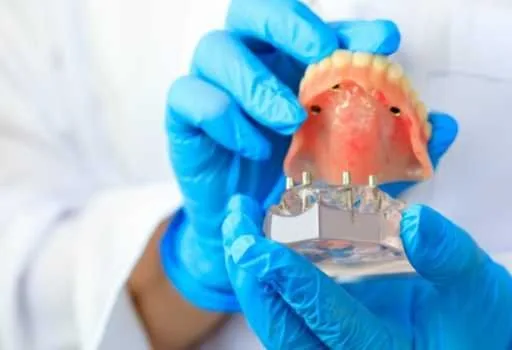
The dental implant process
We take you through implant treatment one step at a time. It starts with an exam, X-rays and a conversation about your goals, costs and whether you’re a good candidate.
To place the implant, we make a small opening in the gum and set the implant post into the jawbone, then close the gum around it. If needed, we fit a temporary tooth so you don’t have a gap while you heal.
Over the next several weeks the implant fuses with the bone, a process called osseointegration. Once it’s solid, we attach an abutment and your final crown, bridge or denture. If the jawbone is thin, a bone graft or sinus lift may come first to make sure the implant lasts.
Single, multiple and full-arch implants
Every plan is built around your mouth. We replace a single tooth with one implant and a crown, several teeth with an implant-supported bridge, or a full arch with options like All-on-4®, where 4 implants anchor a fixed set of teeth.
All-on-4® suits people with several missing, failing or badly damaged teeth, and denture wearers who want something that doesn’t slip. Some patients can leave with a full set of fixed teeth on the day of surgery; we’ll tell you if you qualify.
Benefits of dental implants
- Comfort that feels natural. Implants are anchored in bone, so they don’t shift or rub like dentures.
- Eat and speak with confidence. Chew the foods you like without worrying about slipping teeth.
- Long-lasting. With good care, implants can last decades, often a lifetime. No adhesives, no taking them out at night.
- Protects your jaw. Implants stimulate the bone, which helps prevent the bone loss and shifting that follow a missing tooth.
- Looks real. Crowns are color-matched to your teeth, so most people can’t tell the difference.
After the procedure
Mild swelling, tenderness or a little bleeding is normal for a few days and usually eases with over-the-counter pain relief. Stick to soft foods for the first week. Dissolvable stitches usually fall out within 7–10 days. We give you written aftercare instructions and you can call us with any questions.
Caring for your implants
Treat implants like natural teeth: brush twice a day, floss daily and keep up with check-ups and cleanings. If you have implant-supported dentures, take them out at night and soak them in a cleaning solution. A water flosser helps clean around the gumline.
Frequently asked questions
How much do dental implants cost in West Roxbury?
It depends on whether you need one implant, several, or a full arch like All-on-4®. We give you a personal estimate at your consultation and offer flexible financing.
Who is a good candidate for dental implants?
Most healthy adults. Good candidates have healthy gums, enough jawbone and no uncontrolled health conditions. If bone is thin, a bone graft can often make implants possible.
Do dental implants hurt?
Implants are placed with local anesthesia, so most people feel only pressure. Some soreness for a few days afterward is normal and easy to manage.
How long does the implant process take?
Usually 3 to 6 months from placement to final crown, to give the implant time to fuse with the bone. Some patients qualify for same-day teeth with All-on-4®.
What’s the difference between implants and dentures?
Implants are fixed in place and work like natural teeth. Dentures are removable and can slip or affect speech. Many patients choose implants for comfort and stability.
Do you offer financing for implants?
Yes. We work with most dental insurance plans and offer payment options so you can start treatment sooner.